Tuesday, April 27, 2010

My techniques to manage people, who were in angry

Friends, this section will be very helpful to you all to control your anger, I would like to present this article to all, who can't able to control their anger.

Here I introduce 5 Steps or 5 simple methods to control our HUFF

1 Give Yourself Permission to Express Anger.

        Our society does not allow us to express strong emotions. We are taught to hold in our emotions from the earliest age. This can have a profoundly negative effect on our overall health. It’s not wrong to express anger, fear, sadness, rage. In fact, it is healthy to release these emotions regularly. What’s wrong is when we hurt someone in the process. It is preferable to find safe ways to dump the negative feelings.

2 Combine Mental and Physical Effort for Anger Control.

        Mental therapy alone may be extremely helpful for anger release, but it can only take you so far. Similarly, the physical act of doing exercise can help many people let off steam, but it may not remove deep-seated anger.

        The most effective process is when you can combine both the mental and physical effort. This is when you do a particular physical activity along with the mental intention of releasing the anger. Please see the next step for specific examples of how to combine the mental and physical effort to help release your anger. In each example, don’t just pound pillows, or rip paper, but REALLY FEEL the heavy anger emotion with it’s full intensity WHILE you do the physical activity. This is so important and will assist you to finally RELEASE the anger energy so that it won’t come back. You may have to do the process repeatedly because it releases layer by layer and it is doubtful that you will get to all of it in one session. There are many studies recently showing that doing this type of activity could possibly MAKE someone more aggressive. This is a complicated issue. Let’s say that the type of people who hold in their anger their whole life NEED to learn to become more aggressive in order to become balanced. It is important to learn how to not be a doormat and have people walk all over you. It is important to speak up for what you believe and not take garbage from everyone. So, indeed, if this behavior makes a person RELATIVELY more aggressive, it is in the vein of becoming whole, and that is a good thing! However, please realize if you are already an explosive person who throws temper tantrums and becomes violent, then this approach is NOT appropriate! This recommendation is more appropriate for the “quiet anger” that a person keeps inside for many years. This is the anger that causes physical illnesses, sleep disturbances and other stress-related conditions. Getting the anger out in these cases is extremely therapeutic.

3 Never Hurt Others in the Process.

        Give yourself the opportunity to express anger in a safe way, without hurting anyone else. Most people will benefit by having a private room to pound pillows with their fists or legs, or with a plastic bat. Some people may prefer ripping pages of paper, screaming, throwing plates (old ones). Many people find it helpful to use anger-release music as a stimulus or catalyst for this process. Remember, NEVER hurt yourself in the process and never aim your anger literally at another person. What is important here is your expression of the negative emotion, NOT who receives it. If the anger (or other emotion) is traced to a specific individual, some people have found it helpful to have a symbol of this person at which they can direct the anger. This could be an enlarged photocopy of a photo on a piece of paper which you then scribble-over, tear, burn, or otherwise destroy. Be open to discovering your own dynamic anger-release method.

4 Totally Let Go, Without Hesitation.

        It is also important to suggest that if you feel the need to express yourself in any of these ways, that you either are totally alone so that you don’t feel inhibited, or that you are in the surroundings of a group of people who are supportive of this type of activity. If you don’t have a private room in your house, maybe you can find a secluded area, where no one will hear or see you — even the inside of your car may work. (Don’t do any of this while actually driving!)

5 Strive to Forgive.

        The final step in maintaining anger-release is to truly forgive the person who wronged you as well as to truly forgive yourself.

Tuesday, April 6, 2010

Chinese Mobile Secret Codes

Secret codes for Chinese Mobiles:

After a lots of request of users, now I publish the secret codes for most type of china brands mobile phone. Nokia N-Series: N95, N93, N73, N93I, N83, N8800, and more available in Chinese models. They have features like touchscreen, two camera, 2 SIM slot, two battery, two charger, and some of other features. Most Chinese phones have same software and features, but have different in looks. These phone have a range of under 2k-8k (INR). Sony Ericsson phones also avaliable in Chinese models and soon will here.

China Mobile Secret Codes and Pinout:

default user code: 1122, 3344, 1234, 5678
Engineer mode: *#110*01#
Factory mode: *#987#
Enable COM port: *#110*01# -> Device -> Set UART -> PS Config -> UART1/115200
Restore factory settings: *#987*99#
LCD contrast: *#369#
software version: *#800#
software version: *#900#
set default language: *#0000# Send
set English language: *#0044# Send
set English language (new firmware): *#001# Send

*#0086#, *#0886# set to China
*#0084#, *#0966# set to Vietnamese
*#77218114#
*#19992006#
*#881188#
#*94267357#
*#0084#call

*******************************************
N95Pda and N95S Pinout

2×5
4:Rx
5:TX
6:GND
---------------------
K1 Moto Pinout
4:Rx
5:Tx
6:Gnd
---------------------
PDA ZT6618
1..8 pin mini Conector
3:Rx
4:TX
5:Gnd
--------------------
Cect 8380
1..8 pin mini Conector
1:Gnd
2:Rx
3:Tx
---------------------
KG-200
4:Gnd
3:Tx
2:Rx
----------------------
N91I
1...12 pin Connector
.
5:Gnd . 12:Tx
6:Tx . 13:Rx
7:Rx .

GSM Secret Codes

Type *#61# and press call - Check redirection status.
Cancel all redirections: ##002#
*43# to activate call waiting, to deactivate #43#.
If your phone doesn't have incoming call barring and outgoing call barring, you can try this.
For outgoing call barring dial *33*barcode*# and pres OK. To deactivate it dial #33#barcode*#.
On any phone on any network type in **43# to enable conference calls. You can make up to 7 calls at once
If you need to block SMS reception (if you are spammed by someone) just press this code:
*35*xxxx*16#
xxxx is your Call Barring code (default is 0000).
To remove this barring type: #35*xxxx#
If you want to hide/show your phone number when calling, put one of these codes below in front of the number that you are going to call.
(*#30# / *#31# or *31# / #31# ) Works on some networks.
Typing *0# or *nm# on the beginning of a txt message gives you detailed delivery report on some networks.. But turn off reports in message settings before.
When the sim card-pin blocked type **042*pin2 old*newpin2*newpin2*
Airtel Secret Codes
Dial *123# to see your credit balance. Dial *110# and follow the options.
Dial *109*9898631902# to display the call cost after each call.
If you are in Indiausing IDEA Pre or Postpaid connection then dial *101# you will get a secret menu that will let you to activate or deactivate any supported Idea package for your mobile.

Software version: *#9999#
IMEI number: *#06#
Serial number: *#0001#
Battery status- Memory capacity : *#9998*246#
Debug screen: *#9998*324# - *#8999*324#
LCD kontrast: *#9998*523#
Vibration test: *#9998*842# - *#8999*842#
Alarm beeper - Ringtone test : *#9998*289# - *#8999*289#
Smiley: *#9125#
Software version: *#0837#
Display contrast: *#0523# - *#8999*523#
Battery info: *#0228# or *#8999*228#
Display storage capacity: *#8999*636#
Display SIM card information: *#8999*778#
Show date and alarm clock: *#8999*782#
The display during warning: *#8999*786#
Samsung hardware version: *#8999*837#
Show network information: *#8999*638#
Display received channel number and received intensity: *#8999*9266#

*#1111# S/W Version
*#1234# Firmware Version
*#2222# H/W Version
*#8999*8376263# All Versions Together
*#8999*8378# Test Menu
*#4777*8665# GPSR Tool
*#8999*523# LCD Brightness
*#8999*377# Error LOG Menu
*#8999*327# EEP Menu
*#8999*667# Debug Mode
*#92782# PhoneModel (Wap)
#*5737425# JAVA Mode
*#2255# Call List
*#232337# Bluetooth MAC Adress
*#5282837# Java Version

Type in *#0000# on a Samsung A300 to reset the language
Master reset(unlock) #*7337# (for the new samsungs E700 x600 but not E710)
Samsung E700 type *#2255# to show secret call log (not tested)
Samsung A300, A800 phone unlock enter this *2767*637#
Samsung V200, S100, S300 phone unlock : *2767*782257378#

Friends I would like to share Nokia Secret Codes with you, It'll be helpful to select a right mobile handset to you, the main reason to write this on our blog is: Last day my sweet heart told me, she is going to buy a new mobile handset. Unfortunately she had no idea about the handset selection. So I present his section to her.

Nokia Secret Codes

On the main screen type in:
*#06# for checking the IMEI (International Mobile Equipment Identity).
*#7780# reset to factory settings.
*#67705646# This will clear the LCD display(operator logo).
*#0000# To view software version.
*#2820# Bluetooth device address.
*#746025625# Sim clock allowed status.
#pw+1234567890+1# Shows if sim have restrictions.
*#92702689# - takes you to a secret menu where you may find some of the information below:
1. Displays Serial Number.
2. Displays the Month and Year of Manufacture
3. Displays (if there) the date where the phone was purchased (MMYY)
4. Displays the date of the last repair - if found (0000)
5. Shows life timer of phone (time passes since last start)
*#3370# - Enhanced Full Rate Codec (EFR) activation. Increase signal strength, better signal reception. It also help if u want to use GPRS and the service is not responding or too slow. Phone battery will drain faster though.
*#3370* - (EFR) deactivation. Phone will automatically restart. Increase battery life by 30% because phone receives less signal from network.
*#4720# - Half Rate Codec activation.
*#4720* - Half Rate Codec deactivation. The phone will automatically restart
If you forgot wallet code for Nokia S60 phone, use this code reset: *#7370925538#
Note, your data in the wallet will be erased. Phone will ask you the lock code. Default lock code is: 12345
Press *#3925538# to delete the contents and code of wallet.
Unlock service provider: Insert sim, turn phone on and press vol up(arrow keys) for 3 seconds, should say pin code. Press C,then press * message should flash, press * again and 04*pin*pin*pin# \
*#7328748263373738# resets security code.
Default security code is 12345
Change closed caller group (settings >security settings>user groups) to 00000 and ure phone will sound the message tone when you are near a radar speed trap. Setting it to 500 will cause your phone 2 set off security alarms at shop exits, gr8 for practical jokes! (works with some of the Nokia phones.) Press and hold "0" on the main screen to open wap browser.
(Thank You)

POVERTY IN INDIA


Poverty in India - Facts India Poverty Indian Economic Development Poverty Eradication Information - An Online India. Facts and information about India and role of Indian science, mathematics, technology and medicine in development of human civilization. An Online India is an information portal to facts about Indian culture, customs, art, science, technology, caste, diversity, terrorism, heritage and contribution to the world. Get info on state of Poverty in India

Online florists, shopping malls and gifts cakes, flowers and chocolates stores. A ready source for Yellow Pages and general information about India with info on tourism and tourist travel facilities in India along with a photo gallery of popular sight-seeing monuments and places.


____________________________________________________________________


POVERTY IN INDIA

Poverty in IndiaEven more than 50 years after independence from almost two centuries of British rule, large scale poverty remains the most shameful blot on the face of India. Of its nearly 1 billion inhabitants, an estimated 350-400 million are below the poverty line, 75 per cent of them in the rural areas.

More than 40 per cent of the population is illiterate, with women, tribal and scheduled castes particularly affected.

It would be incorrect to say that all poverty reduction programmes have failed. The growth of the middle class (which was virtually non-existent when India became a free nation in August 1947) indicates that economic prosperity has indeed been very impressive in India, but the distribution of wealth has been very uneven.

The main causes of poverty are illiteracy, a population growth rate by far exceeding the economic growth rate for the better part of the past 50 years, protectionist policies pursued since 1947 to 1991 which prevented large amounts of foreign investment in the country. Poverty alleviation is expected to make better progress in the next 50 years than in the past, as a trickle-down effect of the growing middle class. Increasing stress on education, reservation of seats in government jobs and the increasing empowerment of women and the economically weaker sections of society, are also expected to contribute to the alleviation of poverty. Eradication of poverty can only be a very long-term goal in India.

Poverty in India
Though the middle class has gained from recent positive economic developments, India suffers from substantial poverty. According to the new World Bank's estimates on poverty based on 2005 data, India has 456 million people, 41.6% of its population, living below the new international poverty line of $1.25 (PPP) per day. The World Bank further estimates that 33% of the global poor now reside in India. Moreover, India also has 828 million people, or 75.6% of the population living below $2 a day, compared to 72.2% for Sub-Saharan Africa.
On the other hand, the Planning Commission of India uses its own criteria and has estimated that 27.5% of the population was living below the poverty line in 2004–2005, down from 51.3% in 1977–1978, and 36% in 1993-1994. The source for this was the 61st round of the National Sample Survey (NSS) and the criterion used was monthly per capita consumption expenditure below Rs. 356.35 for rural areas and Rs. 538.60 for urban areas. 75% of the poor are in rural areas, most of them are daily wagers, self-employed householders and landless labourers. Although Indian economy has grown steadily over the last two decades, its growth has been uneven when comparing different social groups, economic groups, geographic regions, and rural and urban areas.
Wealth distribution in India is fairly uneven, with the top 10% of income groups earning 33% of the income. Despite significant economic progress, 1/4 of the nation's population earns less than the government-specified poverty threshold of $0.40/day. Official figures estimate that 27.5% of Indians lived below the national poverty line in 2004-2005. A 2007 report found that 77% of Indians, or 836 million people, lived on less than 20 rupees per day, with most working in informal labour sector with no job or social security, living in abject poverty. Income inequality in India is increasing. In addition, India has a higher rate of malnutrition among children under the age of three (46% in year 2007) than any other country in the world.

Causes of poverty in India
There are at least two main schools of thought regarding the causes of poverty in India.
The Developmental View The Developmental View
Colonial Economic Restructuring Colonial Economic Restructuring
Jawaharlal Nehru noted, "A significant fact which stands out is that those parts of India which have been longest under British rule are the poorest today." The Indian economy was purposely and severely deindustrialized (especially in the areas of textiles and metal-working) through colonial privatizations, regulations, tariffs on manufactured or refined Indian goods, taxes, and direct seizures. In 1830, India accounted for 17.6% of global industrial production against Britain's 9.5%, but by 1900 India's share was down to 1.7% against Britain's 18.5%. (The change in industrial production per capita is even more extreme due to Indian population growth).
Not only was Indian industry losing out, but consumers were forced to rely on expensive (open monopoly produced) British manufactured goods, especially as barter, local crafts and subsistence agriculture was discouraged by law. The agricultural raw materials exported by Indians were subject to massive price swings and declining terms of trade.
British policies in India exacerbated weather conditions to lead to mass famines which, when taken together, led to between 30 to 60 million deaths from starvation in the Indian colonies. Community grain banks were forcibly disabled, land was converted from food crops for local consumption to cotton, opium, tea, and grain for export, largely for animal feed. In summary, deindustrialization, declining terms of trade, and the periodic mass misery of man-made famines are the major ways in which colonial government destroyed development in India and held it back for centuries.

The Neo-Liberal View
Unemployment and underemployment, arising in part from protectionist policies pursued till 1991 that prevented high foreign investment. Poverty also decreased from the early 80s to 1990 significantly however.
Lack of property rights. The right to property is not a fundamental right in India.
Over-reliance on agriculture. There is a surplus of labour in agriculture. Farmers are a large vote bank and use their votes to resist reallocation of land for higher-income industrial projects. While services and industry have grown at double digit figures, agriculture growth rate has dropped from 4.8% to 2%. Neo-liberals tend to view food security as an unnecessary goal compared to purely financial economic growth.
There are also a variety of more direct technical factors:
About 60% of the population depends on agriculture whereas the contribution of agriculture to the GDP is about 18%.
High population growth rate, although demographers generally agree that this is a symptom rather than cause of poverty.
And a few cultural ones have been proposed:
The caste system, under which hundreds of millions of Indians were kept away from educational, ownership, and employment opportunities, and subjected to violence for "getting out of line." British rulers encouraged caste privileges and customs, at least before the 20th century.
Despite this, India currently adds 40 million people to its middle class every year. An estimated 300 million Indians now belong to the middle class; one-third of them have emerged from poverty in the last ten years. At the current rate of growth, a majority of Indians will be middle-class by 2025. Literacy rates have risen from 52 percent to 65 percent in the same period.

Historical trends in poverty statistics
trends in income povertyThe proportion of India's population below the poverty line has fluctuated widely in the past, but the overall trend has been downward. However, there have been roughly three periods of trends in income poverty.
1950 to mid-1970s: Income poverty reduction shows no discernible trend. In 1951, 47% of India's rural population was below the poverty line. The proportion went up to 64% in 1954-55; it came down to 45% in 1960-61 but in 1977-78, it went up again to 51%.
Mid-1970s to 1990: Income poverty declined significantly between the mid-1970s and the end of the 1980s. The decline was more pronounced between 1977-78 and 1986-87, with rural income poverty declining from 51% to 39%. It went down further to 34% by 1989-90. Urban income poverty went down from 41% in 1977-78 to 34% in 1986-87, and further to 33% in 1989-90.
After 1991: This post-economic reform period evidenced both setbacks and progress. Rural income poverty increased from 34% in 1989-90 to 43% in 1992 and then fell to 37% in 1993-94. Urban income poverty went up from 33.4% in 1989-90 to 33.7% in 1992 and declined to 32% in 1993-94 Also, NSS data for 1994-95 to 1998 show little or no poverty reduction, so that the evidence till 1999-2000 was that poverty, particularly rural poverty, had increased post-reform. However, the official estimate of poverty for 1999-2000 was 26.1%, a dramatic decline that led to much debate and analysis. This was because for this year the NSS had adopted a new survey methodology that led to both higher estimated mean consumption and also an estimated distribution that was more equal than in past NSS surveys. The latest NSS survey for 2004-05 is fully comparable to the surveys before 1999-2000 and shows poverty at 28.3% in rural areas, 25.7% in urban areas and 27.5% for the country as a whole, using Uniform Recall Period Consumption. The corresponding figures using the Mixed Recall Period Consumption method was 21.8%, 21.7% and 21.8% respectively. Thus, poverty has declined after 1998, although it is still being debated whether there was any significant poverty reduction between 1989-90 and 1999-00. The latest NSS survey was so designed as to also give estimates roughly, but not fully, comparable to the 1999-2000 survey. These suggest that most of the decline in rural poverty over the period during 1993-94 to 2004-05 actually occurred after 1999-2000.

Outlook for Poverty Alleviation
Since the early 1950s, government has initiated, sustained, and refined various planning schemes to help the poor attain self sufficiency in food production. Probably the most important initiative has been the supply of basic commodities, particularly food at controlled prices, available throughout the country as poor spend about 80 percent of their income on food.
Eradication of poverty in India can only be a long-term goal. Poverty alleviation is expected to make better progress in the next 50 years than in the past, as a trickle-down effect of the growing middle class. Increasing stress on education, reservation of seats in government jobs and the increasing empowerment of women and the economically weaker sections of society, are also expected to contribute to the alleviation of poverty. It is incorrect to say that all poverty reduction programmes have failed. The growth of the middle class (which was virtually non-existent when India became a free nation in August 1947) indicates that economic prosperity has indeed been very impressive in India, but the distribution of wealth is not at all even.
After the liberalization process and moving away from the socialist model, India is adding 60-70 million people to its middle class every year. Analysts write that an estimated 390 million Indians now belong to the middle class; one-third of them have emerged from poverty in the last ten years. At the current rate of growth, a majority of Indians will be middle-class by 2025. Literacy rates have risen from 52 percent to 65 percent during the initial decade of liberalization (1991-2001).
While total overall poverty in India has declined, the extent of poverty reduction is often debated. While there is a consensus that there has not been increase in poverty between 1993-94 and 2004-05, the picture is not so clear if one considers other non-pecuniary dimensions (such as health, education, crime and access to infrastructure). With the rapid economic growth that India is experiencing, it is likely that a significant fraction of the rural population will continue to migrate toward cities, making the issue of urban poverty more significant in the long run. More than 103 million people have moved out of desperate poverty in the course of one generation in urban and rural areas as well. If India can achieve 7.3% annual growth over the next 20 years, 465 million more people will be spared a life of extreme deprivation. Contrary to popular perceptions, rural India has benefited from this growth: extreme rural poverty has declined from 94% in 1985 to 61% in 2005, and they project that it will drop to 26% by 2025. India's economic reforms and the increased growth that has resulted have been the most successful anti-poverty programmes in the country.

Monday, April 5, 2010

The Dangers of Air-conditioning

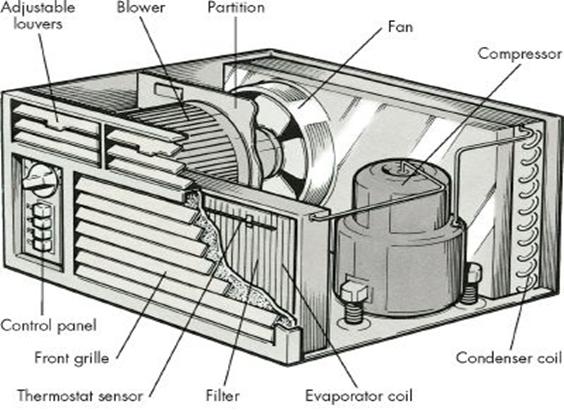
Friend, nowadays we can see various types of air-conditioning systems in almost every sector like: shopping malls, restaurants, beauty parlor, bar, automobiles, etc. Then I had done a study on this, but the result was really shocking, not only for the reasons but also on it's after effects.

About two-thirds of the world's population is expected to live in cities by the year 2020 and, according to the United Nations, approximately 3.7 billion people will inhabit urban areas some ten years later. As cities grow, so do the number of buildings that characterize them: office towers, factories, shopping malls and high-rise apartment buildings.

Percentage of population living or work in air-conditioned enviornments, 1990 and 2030

These structures depend on artificial ventilation system to keep clean and cool air flowing to the people inside. We know these systems by the term 'air-conditioning'.

Although many of us may feel air-conditioners bring relief from hot, humid or polluted outside air, they pose many potential health hazards. Much researches has looked at how the circulation of air inside a closed environment- such as an office building- can spread disease or expose occupants to harmful chemicals.

One of the more widely publicized dangers is that of Legionnaire's disease, which was first recognized in the 1970s. This was found to have affected people in buildings with air-conditioning systems in which warm air pumped out of the system's cooling towers was somehow sucked back into the air intake, in most cases owing to poor design. This warm air was, needless to say, the perfect environment for the rapid growth of disease-carrying bacteria originating from outside the building, where it existed in harmless quantities. The warm, bacteria-laden air was combined with cooled, conditioned air and was then circulated around various parts of the building. Studies showed that even people outside such buildings were at risk if they walked past air exhaust ducts. Cases of Legionnaire's disease are becoming fewer with newer system designs and modifications to older systems, but many older buildings, particularly in developing countries, require constant monitoring.


Cigarette smoking is also carried from room to room by some air-conditioning systems, bringing with it the attendant risks of passive smoking. The past few years have seen a lot of studies into passive smoking – the smoke breathed in by non-smokers living or working near smokers. In Japan, a survey of medical records showed that women whose husbands do not smoke are half as likely to acquire lung cancer as those who are married to smokers. Research into passive smoking in an office setting demonstrated similar risks for non-smokers working for many years next to smokers. Smoky air circulated by the air-conditioning system of the average office, according to an Australian study, causes non-smokers to breath in equivalent of three cigarettes in one day of work.

The ways in which air-conditioners work to 'clean' the air can inadvertently cause health problems, too. One such way is with the use of an electrostatic precipitator, which removes the dust and smoke particles from the air. What precipitators also do, however, is emit large quantities of positive air ions into the ventilation system. A growing number of studies show that overexposure to positive air ions can result in headaches, fatigue and feeling irritation.

Large air-conditioning systems add water to the air they circulate by means of humidifiers. In older systems, the water used for this process is kept in special reservoirs, the bottom of which provide breeding grounds for bacteria and fungi that can find their way into the ventilation systems. The risk to human health from this situation has been highlighted by the fact that the immune systems of approximately half of workers in air-conditioned office buildings have developed antibodies to fight off the organisms found at the bottom of system reservoirs. Chemical disinfectants, called 'biocides', which are added to reservoirs to make them-germ-free, are dangerous in their own right in sufficient quantities, as they often contain compounds such as pentachlorophenol, which is strongly linked to abdominal cancers.

Finally, it should be pointed out that the artificial climatic environment created by air-conditioners can also adversely affect us. In a natural environment, whether indoor or outdoor, there are small variations in temperature and humidity. Indeed, the human body has long been accustomed to these normal changes. In the air-conditioned living or work environment, however, body temperatures remain well under 37oC, our normal temperature. This leads to a weakened immune system and thus greater susceptibility to diseases such as colds and flu.

An Article By,

Arun Kesavan Kolath

Saturday, April 3, 2010

Twelve ways to know you are in LOVE with someone:


Twelve:

You talk with him/her late at night and when you go to bed you still think of him/her.

Eleven:

You walk really slowly when you are with him/her.

Ten:

You don't feel OK when he/she is far away.

Nine:

You smile when you hear his/her voice.

Eight:

When you look at him/her, you do not see other people around you. you see only him/her.

Six:

He/She is everything you want to think.

Five:

You realize that you smile every time you look at him/her.

Four:

You would do any thing to see him/her.

Three:

While you have been reading this, there was a person in your mind all the time.

Two:

You have been so busy thinking of that person that you didn't notice that number SEVEN is missing.

One:

You are going to check above if that's true and now you are silently laughing to yourself.